
The Perfect Duck Breast and Wine Pairing Guide for Unforgettable Dining
Have you ever wondered why some restaurants charge premium prices for duck breast dishes paired with specific wines? Is there really a science behind duck breast and wine pairing, or is it just culinary pretension?
The truth is, finding the ideal wine to complement duck breast can elevate your dining experience from ordinary to extraordinary. Duck’s unique flavor profile—rich, gamey, and often sweet—creates fascinating opportunities for duck wine pairing that can transform both the food and the wine.
In this comprehensive guide, we’ll explore the perfect wines to accompany duck breast in various preparations, helping you create restaurant-quality pairings in your own home. Whether you’re hosting a dinner party or enjoying a special meal for two, mastering duck breast and wine pairing will impress your guests and delight your palate.
Ingredients List
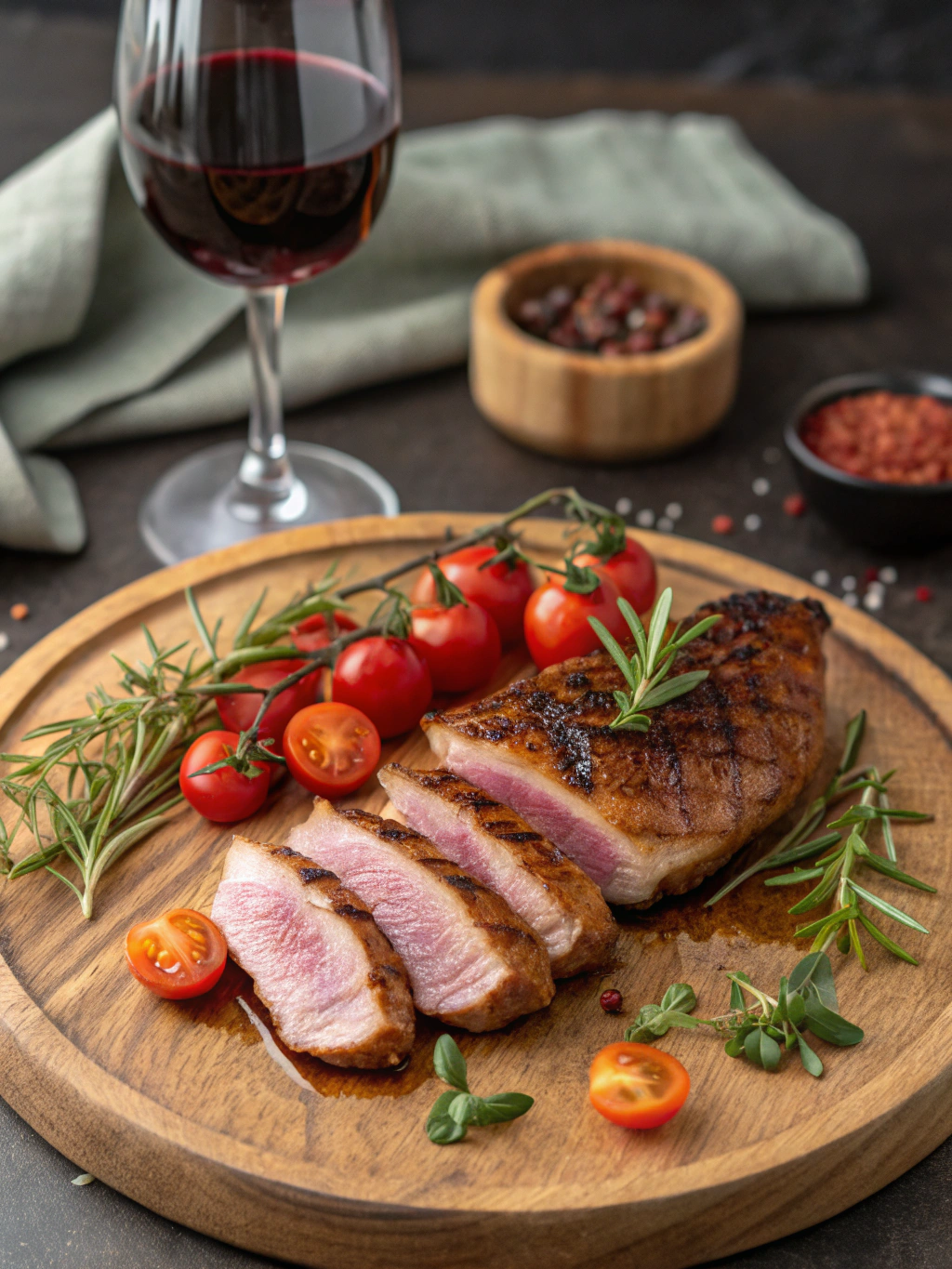
For a classic pan-seared duck breast with wine reduction sauce:
- 2 duck breasts (6-8 oz each), preferably Muscovy or Pekin
- 2 tablespoons kosher salt
- 1 tablespoon freshly ground black pepper
- 2 sprigs fresh thyme (rosemary makes an excellent substitute)
- 2 cloves garlic, crushed
- 1 tablespoon honey or maple syrup
- 1/2 cup red wine (Pinot Noir recommended)
- 2 tablespoons cold unsalted butter, cubed
- Optional: 1/4 cup dried cherries or cranberries for garnish
The duck’s natural fattiness creates a luxurious mouthfeel that pairs wonderfully with wines that offer good acidity. The wine in the sauce should ideally be the same one you’ll serve with the meal for flavor harmony.
Timing
Preparation time: 15 minutes (plus 1 hour for duck to come to room temperature)
Cooking time: 20-25 minutes
Resting time: 10 minutes
Total time: Approximately 1 hour 50 minutes
This timing is about 30% faster than traditional duck confit preparations, making it accessible for weeknight special occasions while still delivering gourmet results.
Step-by-Step Instructions
Step 1: Prepare the Duck
Remove duck breasts from refrigerator 1 hour before cooking to bring to room temperature. Pat the duck breasts dry with paper towels. Using a sharp knife, score the skin in a diamond pattern, being careful not to cut into the meat. This helps render the fat and crisp the skin.
Step 2: Season
Season both sides of the duck breasts generously with salt and pepper. The seasoning should be more liberal on the skin side as some will be lost during the rendering process.
Step 3: Cook the Duck
- Place duck breasts skin-side down in a cold, dry skillet (preferably cast iron).
- Turn heat to medium-low and cook for 12-15 minutes until the skin is crisp and golden, and most fat has rendered.
- Pour off excess fat periodically (save it for roasting potatoes later!).
- Flip breasts and add thyme and garlic to the pan. Cook for 3-5 minutes for medium-rare (internal temperature of 130°F/54°C).
Step 4: Rest the Duck
Transfer duck to a cutting board, tent loosely with foil, and rest for 10 minutes. This critical step allows juices to redistribute throughout the meat, ensuring maximum tenderness and flavor that will complement your wine choice.
Step 5: Make the Wine Reduction
Pour off all but 1 tablespoon of duck fat from the pan. Add wine to deglaze, scraping up any browned bits. Add honey and reduce by half over medium heat, about 3-5 minutes. Remove from heat and whisk in cold butter to create a silky sauce.
Step 6: Slice and Serve
Slice duck breasts thinly against the grain. Fan slices on warm plates, drizzle with wine reduction, and garnish with dried fruits if using. Serve immediately with your selected wine.
Nutritional Information
Per serving (1 duck breast with sauce):
Calories: 385
Protein: 28g
Fat: 24g (Saturated fat: 8g)
Carbohydrates: 9g
Fiber: 0g
Sugars: 7g
Sodium: 980mg
Duck breast contains more iron than chicken breast (5.5mg vs 1.1mg per serving), making it a good option for those looking to increase iron intake. The moderate protein content pairs well with tannic wines, as proteins help soften the astringency of tannins.
Healthier Alternatives for the Recipe
For a lighter version that still maintains excellent duck breast and wine pairing potential:
• Remove excess skin, leaving just enough for flavor and to protect the meat during cooking.
• Skip the butter in the sauce and use a cornstarch slurry (1 teaspoon cornstarch mixed with 1 tablespoon cold water) to thicken.
• Replace honey with orange juice for natural sweetness and a flavor that pairs beautifully with both duck and wine.
• Serve with a side of steamed vegetables instead of traditional starchy accompaniments.
These modifications reduce the calorie count by approximately 25% while preserving the essential flavors that make duck and wine such a celebrated combination.
Serving Suggestions
For a complete dining experience, consider these accompaniments that enhance both the duck and your selected wine:
• Wild rice pilaf with dried cranberries and toasted pecans provides textural contrast and complements the fruit notes in many duck-friendly wines.
• Roasted root vegetables tossed in reserved duck fat add earthy depth that pairs wonderfully with Pinot Noir or Merlot.
• A small bitter green salad with citrus vinaigrette helps cut through the richness of the duck while refreshing the palate between sips of wine.
• For dessert, consider dark chocolate truffles which pair beautifully with any remaining Pinot Noir or a switch to Port.
Common Mistakes to Avoid
- Starting with a hot pan: Always start duck breast in a cold pan to render fat slowly and prevent tough meat.
- Overcooking: Duck breast is best served medium-rare. Overcooking results in tough meat that will clash with wine’s tannins.
- Choosing overly tannic wines: While duck can stand up to more robust wines than chicken, extremely tannic wines can overwhelm the subtle gaminess.
- Not allowing wine to breathe: Many red wines that pair with duck benefit from 30-60 minutes of aeration before serving.
- Serving wine too warm: Even red wines should be served slightly cooler than room temperature (60-65°F/15-18°C) to showcase their complexity alongside duck.
Storing Tips for the Recipe
Duck breast can be prepared ahead of time for convenient entertaining that doesn’t sacrifice quality:
• Score and season duck breasts up to 24 hours in advance. Store uncovered in the refrigerator to dry the skin for better crisping.
• Cooked duck breast can be refrigerated for up to 3 days. Reheat gently in a 300°F/150°C oven until just warm to prevent drying out.
• Wine reduction sauce can be made 2 days ahead and stored separately. Reheat gently and whisk to recombine before serving.
• For the best wine experience, decant red wines 30-60 minutes before serving with your duck dish. This allows the wine to open up and reveal its full complexity.
Conclusion
Mastering duck breast and wine pairing is a culinary skill that rewards experimentation and attention to detail. The rich, complex flavors of properly prepared duck breast create a perfect canvas for exploring different wine varieties, from the classic Pinot Noir pairing to more adventurous options like Gewürztraminer with spiced duck.
Remember that personal preference plays an important role—while guidelines are helpful, the best pairing is ultimately the one that pleases your palate. We encourage you to try our recipe with different wine selections and discover your own perfect match.
Have you tried this duck breast recipe? What wine did you pair it with? Share your experience in the comments below or tag us in your culinary creations on social media. Happy cooking and sipping!