
Duck Confit with Red Wine: A Luxurious French Classic Made Simple
Have you ever wondered why restaurant-quality duck confit red wine seems impossible to recreate at home? Is this elegant French dish truly beyond the reach of home cooks, or is it just shrouded in culinary mystique?
The truth is, making duck confit with a rich red wine sauce is entirely achievable in your own kitchen. This luxurious dish combines tender, slow-cooked duck with the complex flavors of red wine to create a meal that’s both impressive and deeply satisfying.
Today, I’ll guide you through creating the perfect duck confit red wine dish that will rival any restaurant version. With some patience and the right technique, you’ll master this French classic that’s perfect for special occasions or whenever you want to elevate your dinner table.
Ingredients List
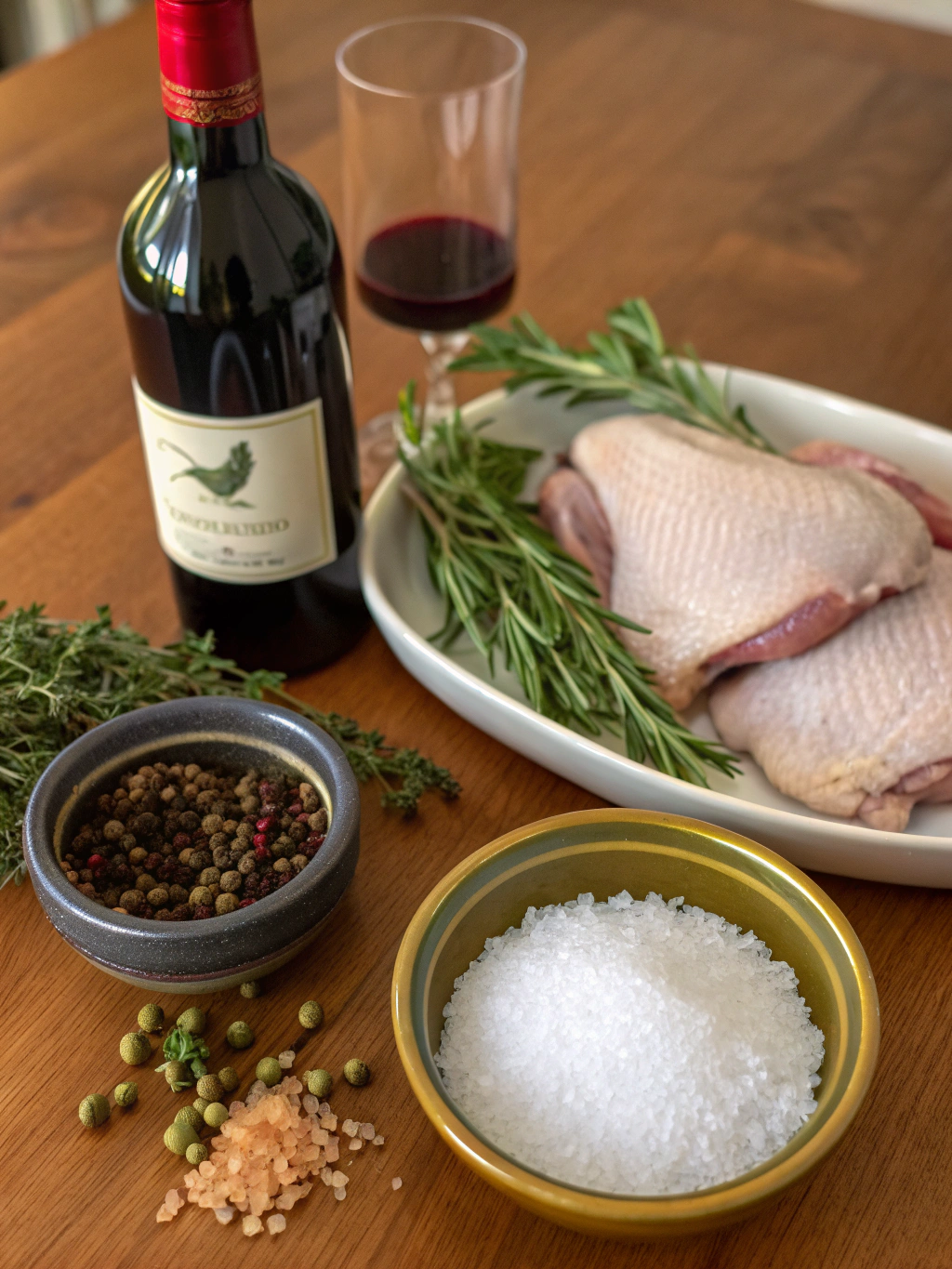
Gathering quality ingredients is the foundation of an exceptional Duck confit recipe. Here’s everything you’ll need to create this sumptuous dish:
- 4 duck legs (about 2 pounds total)
- 3 tablespoons kosher salt
- 1 tablespoon fresh thyme leaves
- 4 garlic cloves, minced
- 1 teaspoon black peppercorns, crushed
- 2 bay leaves, crumbled
- 4 cups duck fat (can substitute with a mixture of vegetable oil and butter in a pinch)
- 1 cup full-bodied red wine (Cabernet Sauvignon or Merlot work beautifully)
- 1 shallot, finely diced
- 2 tablespoons honey
- 1 cup chicken or duck stock
- 2 sprigs fresh thyme
- 2 tablespoons cold butter, for finishing the sauce
For the best results, choose Moulard duck legs, known for their meaty texture. If unavailable, Pekin duck legs make a suitable alternative. The wine selection significantly impacts the final flavor – opt for a wine you enjoy drinking for the richest taste experience.
Timing
Creating duck confit red wine is not a rushed affair, but the results are well worth the wait:
Preparation time: 30 minutes (plus 24-48 hours for curing)
Cooking time: 3 hours for confit, 15 minutes for sauce
Total time: Approximately 28 hours (including curing time)
While this might seem lengthy compared to many recipes, the actual hands-on time is relatively brief – just 45 minutes. The remaining time is passive cooking and curing, during which the magic happens as flavors develop and intensify.
Step-by-Step Instructions
Step 1: Prepare and Cure the Duck
Begin by thoroughly patting the duck legs dry with paper towels. In a small bowl, combine salt, thyme leaves, minced garlic, crushed peppercorns, and crumbled bay leaves. Rub this mixture generously over the duck legs, ensuring every surface is covered. Place the seasoned legs in a glass dish, cover with plastic wrap, and refrigerate for 24-48 hours. This curing process is essential for authentic flavor development.
Step 2: Prepare for Confiting
After curing, rinse the duck legs thoroughly under cold water to remove the salt mixture. Pat completely dry with paper towels – this is crucial for proper cooking. Preheat your oven to 225°F (107°C). In a large, ovenproof dish or Dutch oven, melt the duck fat over low heat until completely liquid.
Step 3: Confit the Duck Legs
Carefully place the duck legs in the melted fat, ensuring they’re completely submerged. If needed, add more fat or oil. Cover the dish and place in the preheated oven. Cook for approximately 3 hours, or until the meat is extremely tender and nearly falling off the bone. The low, slow cooking is what transforms tough duck legs into silky, tender meat.
Step 4: Crisp the Skin
Once the duck is cooked, carefully remove the legs from the fat and place them on a wire rack to drain. Preheat your broiler. Place the duck legs skin-side up on a baking sheet and broil for 3-5 minutes, watching carefully until the skin turns golden and crispy. This contrast of textures – crispy exterior with meltingly tender interior – is the hallmark of perfect duck confit.
Step 5: Prepare the Red Wine Sauce
While the duck rests, prepare your sauce. In a saucepan over medium heat, sauté the diced shallot until translucent. Add the red wine and bring to a simmer. Allow the wine to reduce by half, concentrating its flavors. Add the stock, honey, and thyme sprigs, then continue simmering until the sauce coats the back of a spoon – about 10 minutes.
Step 6: Finish and Serve
Strain the sauce through a fine-mesh sieve. Return to low heat and whisk in the cold butter one tablespoon at a time – this creates a silky, glossy sauce. Season with salt and pepper to taste. Place each duck leg on a warmed plate, drizzle generously with the red wine sauce, and serve immediately for a truly memorable dining experience.
Nutritional Information
Understanding the nutritional profile of duck confit red wine helps you make informed dietary choices. Per serving (one duck leg with sauce):
Calories: Approximately 650 kcal
Protein: 38g
Fat: 52g (primarily from the duck and confit process)
Carbohydrates: 8g
Fiber: 0.5g
Sugar: 6g (primarily from the wine and honey)
Sodium: 850mg
Duck meat is notably rich in iron, zinc, and B vitamins, particularly B12, which supports neurological function. The red wine reduction contains beneficial antioxidants, including resveratrol, known for its heart-healthy properties when consumed in moderation.
Healthier Alternatives for the Recipe
While traditional duck confit is indulgent, several modifications can create a lighter version without sacrificing flavor:
Replace the full duck fat immersion with a combination of duck fat and chicken broth, reducing the fat content by nearly 40%. Consider removing the skin after confiting but before crisping for those monitoring fat intake.
For a lower-sodium version, reduce the salt in the curing mixture by half and extend the curing time by 12 hours. The wine sauce can be made with less honey and a splash of balsamic vinegar for complexity without added sugar.
For those avoiding alcohol, substitute the red wine with pomegranate juice mixed with a tablespoon of red wine vinegar, which provides similar acidity and fruit notes without the alcohol content.
Serving Suggestions
Elevate your duck confit experience with these complementary side dishes and presentation ideas:
Serve alongside a creamy potato gratin or buttery mashed potatoes to absorb the delicious sauce. For a lighter option, pair with a crisp green salad dressed with a simple vinaigrette to cut through the richness.
Roasted root vegetables like carrots, parsnips, and turnips make excellent accompaniments, especially when glazed with a touch of the same wine used in the sauce. For a complete French experience, serve with braised lentils du Puy, which traditionally accompany duck in French cuisine.
For wine pairing, continue with the same type used in the sauce, or choose a Pinot Noir or Burgundy, whose earthy notes complement the duck beautifully.
Common Mistakes to Avoid
- Insufficient curing time: Rushing the curing process results in less flavorful meat and improper texture. Always allow at least 24 hours for proper salt penetration.
- Cooking at too high a temperature: Duck confit requires low, slow cooking. Temperatures above 250°F can lead to tough, stringy meat instead of the desired melt-in-your-mouth texture.
- Not drying the duck thoroughly: Moisture on the duck legs before confiting can create steam, preventing proper preservation and texture development.
- Reducing the wine sauce too rapidly: High heat can make your sauce bitter. Always reduce wine sauces slowly over medium-low heat for the best flavor.
- Adding cold butter to hot sauce: This causes the butter to separate rather than emulsify. Always remove the sauce from heat and whisk in cold butter gradually.
Storing Tips for the Recipe
One of the greatest advantages of duck confit is its exceptional storage capability – traditionally, it was a preservation method:
If keeping the duck submerged in its cooking fat, properly refrigerated confit can last up to one month. Ensure the legs are completely covered with fat and stored in an airtight container.
For longer storage, duck confit freezes beautifully. Remove the legs from the fat, wrap individually in plastic wrap and foil, then freeze for up to 3 months. The fat itself can be strained, refrigerated, and reused for future confit preparations.
The red wine sauce can be made ahead and refrigerated for up to 5 days. Reheat gently and whisk in fresh butter just before serving for the best texture and flavor.
Conclusion
Mastering duck confit with red wine sauce represents a culinary achievement that connects you to centuries of French cooking tradition. The contrast between the crispy exterior and tender, flavorful meat creates an unforgettable dining experience that’s well worth the time investment.
The beauty of this dish lies not just in its impressive presentation but in how the simple ingredients transform through technique into something extraordinary. Each step builds flavor, from the aromatic cure to the slow confit process and the reduction of wine into a silky sauce.
Have you tried making duck confit at home? I’d love to hear about your experience or answer any questions in the comments below. And if you make this recipe, please share your results – there’s nothing more rewarding than seeing others enjoy these time-honored culinary traditions!