
Rabbit Stew in Red Wine: A Rustic French Delight
Have you ever wondered why rabbit stew in red wine remains one of the most cherished traditional French dishes, yet is rarely attempted in home kitchens? This classic preparation, known as “civet de lapin” in France, combines tender rabbit meat with the rich complexity of red wine to create a dish that’s simultaneously rustic and sophisticated.
The magic of this rabbit stew in red wine lies in its perfect balance of flavors – the gamey notes of rabbit harmonizing with the depth of a good burgundy or pinot noir. Today, I’ll guide you through creating this impressive yet approachable dish that will transport your taste buds straight to the French countryside.
Ingredients List
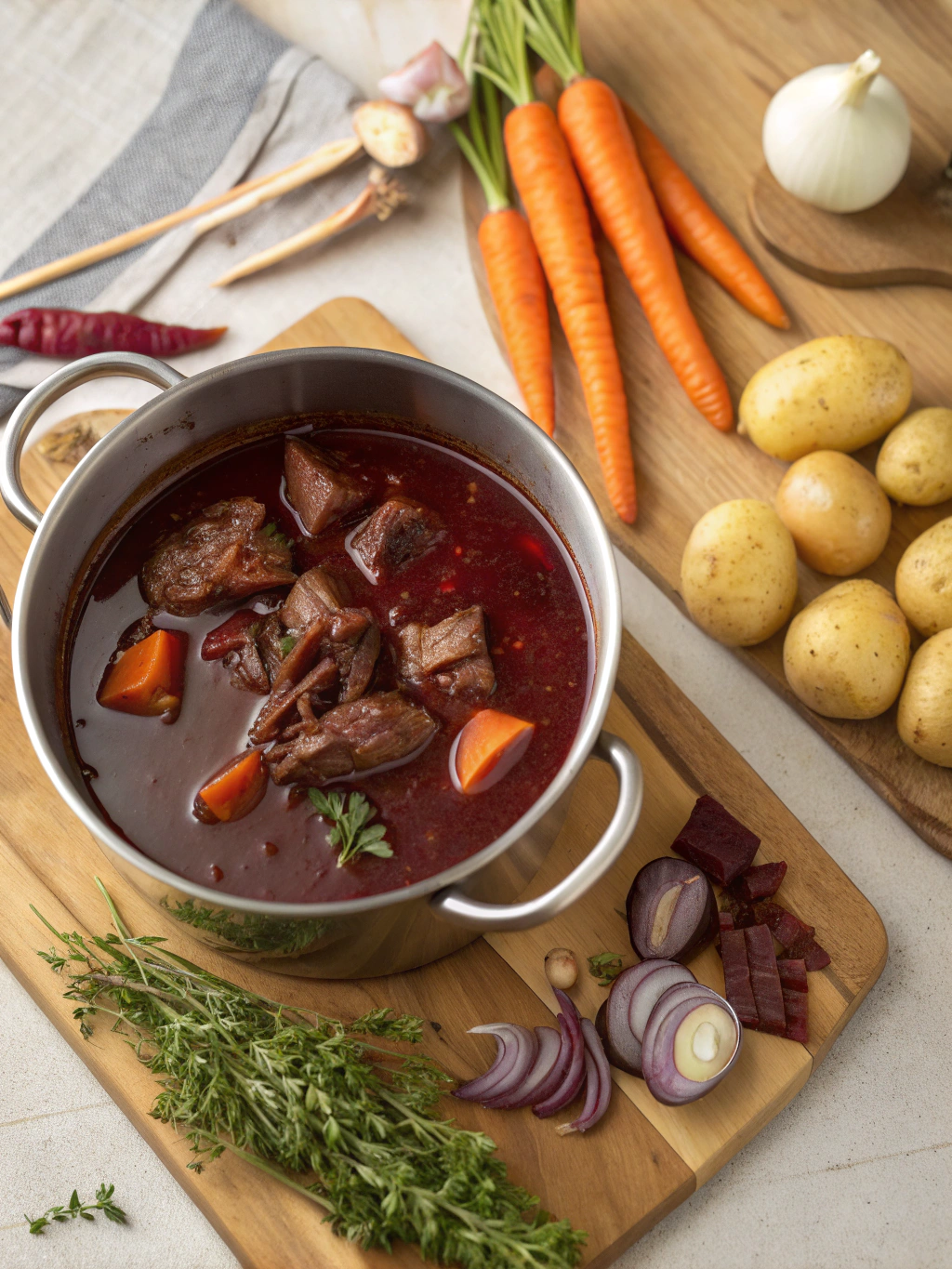
- 3-4 pounds rabbit, cut into serving pieces
- 2 cups good quality red wine (preferably Burgundy or Pinot Noir)
- 1/4 cup cognac or brandy (optional but recommended)
- 6 ounces bacon or pancetta, diced
- 2 medium onions, finely chopped
- 2 carrots, diced
- 3 cloves garlic, minced
- 2 tablespoons all-purpose flour
- 2 cups chicken or game stock
- 1 bouquet garni (thyme sprigs, bay leaf, parsley stems tied together)
- 8 ounces mushrooms (button or cremini), quartered
- 12-15 pearl onions, peeled
- 2 tablespoons butter
- 2 tablespoons olive oil
- Salt and freshly ground black pepper to taste
- Fresh parsley, chopped (for garnish)
Substitution options: If rabbit isn’t available, chicken thighs make a good alternative. For a non-alcoholic version, use unsweetened grape juice mixed with a tablespoon of vinegar plus extra stock. Pearl onions can be replaced with shallots if needed.
Timing
Preparation time: 30 minutes (plus optional overnight marinating)
Cooking time: 2 hours
Total time: 2.5 hours (active cooking) or up to 24 hours if marinating overnight
While this might seem lengthy compared to quick weeknight meals, the actual hands-on time is only about 45 minutes – the rest is gentle simmering that develops the extraordinary depth of flavor that makes rabbit stew in red wine so special.
Step-by-Step Instructions
Step 1: Marinate the Rabbit (Optional but Recommended)
Place rabbit pieces in a large bowl and add wine, chopped onion, crushed garlic, and bouquet garni. Cover and refrigerate for at least 4 hours or overnight. This step tenderizes the meat and infuses it with flavor. If short on time, you can skip this step, but the flavor won’t be quite as developed.
Step 2: Prepare the Base
If marinated, remove rabbit from marinade and pat dry with paper towels. Strain and reserve the marinade liquid and aromatics separately. In a large Dutch oven or heavy-bottomed pot, cook the diced bacon over medium heat until crisp and fat is rendered. Remove bacon with a slotted spoon and set aside, leaving the fat in the pot.
Step 3: Brown the Rabbit
Increase heat to medium-high. Season rabbit pieces with salt and pepper, then brown them in batches in the bacon fat, about 3-4 minutes per side. Don’t overcrowd the pan – proper browning is essential for developing flavor. Transfer browned pieces to a plate.
Step 4: Create the Flavor Base
In the same pot, add butter if needed. Add onions and carrots, cooking until softened, about 5-7 minutes. Add garlic and cook for another minute until fragrant. Sprinkle flour over vegetables and cook, stirring constantly, for 2 minutes to remove raw flour taste.
Step 5: Deglaze and Build the Stew
If using cognac, add it now and carefully ignite with a long match to burn off alcohol (stand back!). Once flames subside, add reserved wine marinade, stock, reserved aromatics, and bouquet garni. Bring to a simmer, scraping up any browned bits from the bottom of the pot.
Step 6: Slow Cook to Perfection
Return rabbit and bacon to the pot. Cover and simmer gently for 1 to 1.5 hours, until rabbit is tender but not falling apart. The meat should be easily pierced with a fork but still hold its shape. Check occasionally and adjust heat to maintain a gentle simmer.
Step 7: Prepare the Garnish
While stew simmers, heat olive oil in a separate pan. Add pearl onions and mushrooms, sautéing until golden brown and tender, about 8-10 minutes. Season with salt and pepper. These will be added to the stew later for better texture and presentation.
Step 8: Finish the Stew
When rabbit is tender, carefully remove pieces to a warm plate. Strain the cooking liquid through a fine-mesh sieve into a clean pot, pressing on solids to extract flavor. Return liquid to heat and simmer until reduced by about one-third and slightly thickened. Return rabbit to the sauce along with sautéed mushrooms and pearl onions.
Step 9: Final Touches
Gently heat everything together for 10 minutes to marry flavors. Taste and adjust seasoning. For a silkier finish, swirl in a tablespoon of cold butter just before serving. Garnish with fresh chopped parsley.
Nutritional Information
Per serving (based on 6 servings):
Calories: 425
Protein: 38g
Fat: 21g (Saturated fat: 7g)
Carbohydrates: 12g
Fiber: 2g
Sugar: 4g
Sodium: 580mg
Rabbit meat is notably leaner than chicken, beef, or pork, containing approximately 50% less fat than beef and 25% less than chicken. It’s also higher in protein by weight, making this stew a protein-rich meal option despite its indulgent flavor profile.
Healthier Alternatives for the Recipe
To create a lighter version of this classic dish, consider these modifications:
Reduce the bacon to 3 ounces and drain excess fat after rendering. Use olive oil instead of butter for sautéing. Skip the final butter enrichment or use just a teaspoon for flavor. Increase the vegetable content by adding celery, more carrots, or even parsnips for additional fiber and nutrients.
For a gluten-free version, replace flour with 1 tablespoon cornstarch mixed with 2 tablespoons cold water, added during the final 15 minutes of cooking. Those monitoring alcohol intake can use the non-alcoholic substitution mentioned in the ingredients section, as the cooking process doesn’t completely eliminate alcohol.
Serving Suggestions
Traditional accompaniments for rabbit stew in red wine include:
Creamy mashed potatoes or buttered egg noodles to soak up the rich sauce. A side of steamed green vegetables like haricots verts (French green beans) or buttered peas adds color and freshness. Crusty artisan bread is perfect for mopping up every last bit of the delicious sauce.
For a complete French-inspired meal, start with a simple green salad dressed with vinaigrette, serve the rabbit civet as the main course, and finish with a cheese plate or light fruit dessert like poached pears. The same rabbit wine pairing used in cooking (a medium-bodied Burgundy or Pinot Noir) works beautifully for drinking with the meal.
Common Mistakes to Avoid
- Overcooking the rabbit – Unlike chicken, rabbit can become tough and dry when overcooked. Check for doneness frequently during the simmering process.
- Using poor quality wine – Since wine is a primary flavor component, use something you’d enjoy drinking. Cooking concentrates flavors, so flaws in the wine will be magnified.
- Boiling instead of simmering – A gentle simmer develops flavor without toughening the meat. Rapid boiling will result in stringy, dry rabbit.
- Skipping the browning step – Properly browning the meat creates depth of flavor through the Maillard reaction. Don’t rush this critical step.
- Adding mushrooms too early – Adding them at the beginning will result in soggy, flavorless mushrooms. Sautéing separately and adding later preserves their texture and flavor.
Storing Tips for the Recipe
Like many stews, rabbit civet actually improves with time as flavors meld and develop. Store leftovers in an airtight container in the refrigerator for up to 3 days. The stew can be gently reheated on the stovetop over medium-low heat, adding a splash of stock if needed to thin the sauce.
For longer storage, this stew freezes beautifully for up to 3 months. Cool completely before transferring to freezer-safe containers, leaving some headspace for expansion. Thaw overnight in the refrigerator before reheating. The texture of the mushrooms may change slightly after freezing, but the overall dish remains delicious.
For make-ahead preparation, complete the recipe through Step 6, then refrigerate. On serving day, prepare the mushroom and pearl onion garnish fresh, then complete the final steps for the best texture and presentation.
Conclusion
This classic French rabbit civet transforms humble ingredients into a sophisticated dish that’s perfect for special occasions or whenever you crave something truly extraordinary. The marriage of tender rabbit with the complex notes of red wine creates a memorable meal that honors traditional French country cooking.
Have you tried making this rabbit stew? I’d love to hear about your experience in the comments below! If you enjoyed this recipe, please share it with friends and family who appreciate culinary adventures. For more classic European recipes with modern twists, subscribe to our newsletter and never miss a delicious post.