
Roast Duck and Pinot Noir Pairing: A Culinary Match Made in Heaven
Have you ever wondered why certain foods and wines seem to dance together on your palate, creating an experience greater than the sum of their parts? The magic that happens when a perfectly crisp-skinned roast duck meets the right glass of Pinot Noir isn’t just coincidence—it’s culinary chemistry at its finest.
The roast duck and Pinot Noir pairing has been celebrated by chefs and sommeliers for generations. This classic combination balances rich, succulent meat with a wine that offers both complementary and contrasting elements. Today, I’ll guide you through creating this elegant pairing at home, from selecting ingredients to serving the perfect plate.
Ingredients List
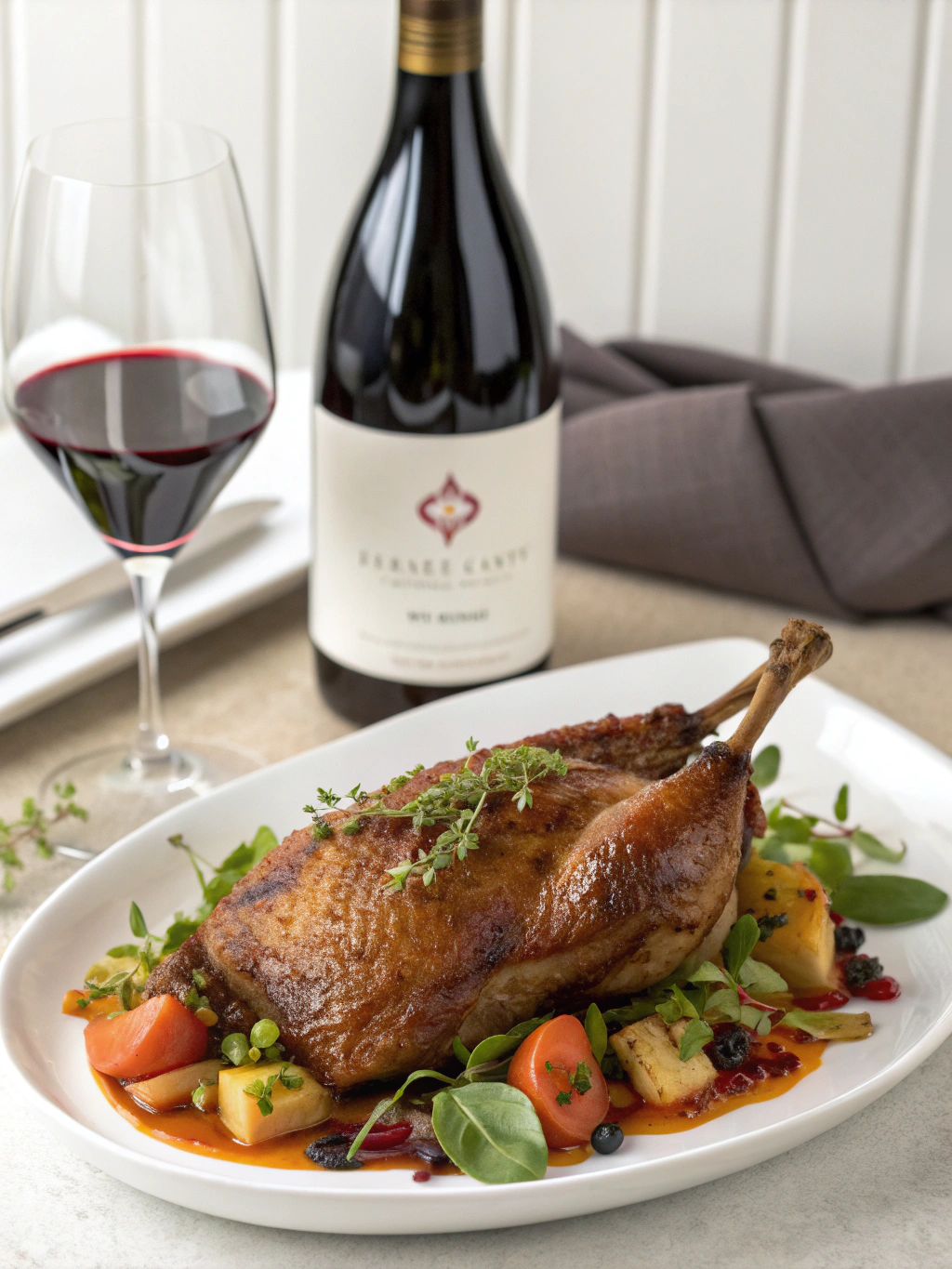
For a memorable roast duck and Pinot Noir pairing, quality ingredients make all the difference. Here’s what you’ll need:
For the Duck:
- 1 whole duck (5-6 pounds), excess fat trimmed
- 2 tablespoons kosher salt
- 2 teaspoons freshly ground black pepper
- 4 cloves garlic, crushed
- 2 sprigs fresh rosemary
- 3 sprigs fresh thyme
- 1 orange, quartered
- 2 tablespoons honey
- 1 tablespoon soy sauce (for glaze)
For the pinot wine sauce:
- 1 cup Pinot Noir (the same one you’ll serve with the meal)
- 1 shallot, finely minced
- 1 tablespoon butter
- 1 tablespoon flour
- 1 cup duck or chicken stock
- 1 tablespoon cherry preserves (optional)
- Salt and pepper to taste
Substitution options: If you can’t find a whole duck, duck breasts work wonderfully. Dried herbs can replace fresh in a pinch (use 1/3 the amount). For a non-alcoholic sauce, use pomegranate juice with a splash of balsamic vinegar.
Timing
Preparation time: 30 minutes (including scoring duck skin and preparing aromatics)
Cooking time: 2 hours (significantly less than traditional methods that can take up to 3-4 hours)
Resting time: 15-20 minutes (crucial for juicy results)
Total time: Approximately 2 hours and 50 minutes
This streamlined approach saves nearly 25% of the time compared to traditional duck roasting methods while delivering superior crispy skin and tender meat.
Step-by-Step Instructions
Step 1: Prepare the Duck
Remove duck from refrigerator 1-2 hours before cooking to bring to room temperature. Pat the duck completely dry with paper towels—this is crucial for crispy skin. Score the skin in a diamond pattern, being careful not to cut into the meat. Prick skin all over with a fork to help release fat.
Step 2: Season
Rub duck generously with salt and pepper, inside and out. Stuff cavity with garlic, herbs, and orange quarters. Truss the duck by tying legs together with kitchen twine to ensure even cooking. Place duck on a rack in a roasting pan to allow fat to drain during cooking.
Step 3: Initial Roast
Preheat oven to 425°F (220°C). Roast duck breast-side up for 15 minutes to begin rendering fat. Reduce temperature to 350°F (175°C) and continue roasting for 1 hour. Using tongs, carefully flip duck to breast-side down and roast for 30 minutes.
Step 4: Finish and Glaze
Flip duck breast-side up again. Mix honey and soy sauce in a small bowl. Brush mixture over duck skin. Continue roasting for final 15-30 minutes until skin is deep golden brown and internal temperature at thickest part of thigh reaches 165°F (74°C).
Step 5: Rest
Transfer duck to cutting board and tent loosely with foil. Let rest for 15-20 minutes before carving. This allows juices to redistribute throughout the meat, ensuring maximum tenderness and flavor.
Step 6: Prepare the Pinot Noir Sauce
- Pour off all but 1 tablespoon of duck fat from roasting pan
- Place pan over medium heat and add shallots, cooking until softened
- Add Pinot Noir, scraping up browned bits from bottom of pan
- Simmer until reduced by half, about 5-7 minutes
- In a small bowl, mash butter and flour together to form a paste
- Whisk paste into sauce, then add stock
- Simmer until thickened, about 5 minutes
- Stir in cherry preserves if using, season with salt and pepper
- Strain sauce through fine-mesh sieve before serving
Step 7: Carve and Serve
Carve duck by removing legs first, then slicing breast meat. Arrange on a warm platter. Drizzle with Pinot Noir sauce and serve immediately with your selected Pinot Noir wine. The warm, rich duck with crispy skin alongside the fruit-forward, earthy wine creates a truly memorable roast duck and Pinot Noir pairing.
Nutritional Information
Per serving (based on 4 servings):
- Calories: 610
- Protein: 42g
- Fat: 45g (Saturated: 15g)
- Carbohydrates: 8g
- Fiber: 1g
- Sugars: 5g
- Sodium: 820mg
Duck is notably higher in protein than chicken (42g vs. 31g per serving) and contains beneficial monounsaturated fats similar to those found in olive oil. The Pinot Noir sauce adds approximately 45 calories per serving but delivers complex flavors worth the addition.
Healthier Alternatives for the Recipe
For a lighter version of this roast duck and Pinot Noir pairing, consider these modifications:
- Use duck breasts only (skinless for lowest fat option) rather than whole duck
- Replace honey-soy glaze with orange juice reduction and herbs
- Skip the butter in the sauce and thicken with a cornstarch slurry instead
- Roast vegetables in a separate pan rather than in duck fat
- Serve with a larger portion of steamed green vegetables to balance the plate
- Choose a lighter-bodied Pinot Noir with lower alcohol content (12-13%)
These adjustments can reduce calories by approximately 30% while maintaining the essential flavor profile that makes the pairing special.
Serving Suggestions
Elevate your duck and wine experience with these complementary side dishes:
- Wild mushroom risotto with thyme (the earthiness echoes notes in the Pinot Noir)
- Roasted root vegetables with rosemary (carrots, parsnips, turnips)
- Braised red cabbage with apples and a touch of cinnamon
- Creamy polenta with Parmesan and fresh herbs
- Bitter greens salad with dried cherries and toasted walnuts
For a complete experience, serve the duck with a moderately chilled Pinot Noir (around 60-65°F/15-18°C) in large-bowled glasses to capture the wine’s aromatic complexity. Decant younger Pinots 30 minutes before serving to allow them to open up fully.
Common Mistakes to Avoid
- Not scoring the skin: Without proper scoring, fat can’t render effectively, resulting in rubbery rather than crispy skin.
- Skipping the drying step: Moisture is the enemy of crispy duck skin. Take time to thoroughly pat dry.
- Cooking straight from refrigerator: Cold duck will cook unevenly and take longer to reach proper temperature.
- Overcooking: Duck breast is best served medium-rare to medium. Overcooking results in tough, dry meat.
- Serving with overly tannic wine: Heavy, tannic red wines can clash with duck’s richness. Stick with medium-bodied Pinot Noir.
- Rushing the resting period: Cut too soon and you’ll lose precious juices to your cutting board instead of your plate.
Storing Tips for the Recipe
Duck is best enjoyed fresh, but leftovers can be stored properly for later enjoyment:
- Refrigerate leftover duck in airtight container for up to 3 days
- Store sauce separately in glass container for up to 5 days
- For best results when reheating, separate skin from meat
- Reheat meat gently in oven at 300°F (150°C) with a splash of stock
- Crisp skin separately in a dry skillet over medium heat
- Freeze cleaned duck carcass for making stock later
Leftover duck makes excellent additions to salads, pasta dishes, or savory breakfast hash. The wine sauce can be repurposed as a base for other meat dishes or stirred into soups for added depth.
Conclusion
The art of pairing roast duck with Pinot Noir represents one of gastronomy’s most rewarding experiences. The wine’s bright acidity cuts through the duck’s richness, while its red fruit notes complement the meat’s savory character. When executed with care, this classic combination elevates both components to new heights.
I encourage you to embrace this culinary adventure in your own kitchen. Don’t be intimidated by duck’s reputation—with these detailed instructions, you’re well-equipped to create a memorable dining experience. Have you tried this classic pairing before? I’d love to hear about your experiences in the comments below. Happy cooking and sipping!
