
Roast Goose and Wine Pairing: The Ultimate Holiday Special
Have you ever wondered why roast goose, a centerpiece of traditional holiday feasts, seems to have fallen out of fashion compared to turkey or ham? Is it possible we’ve forgotten the sublime experience of perfectly cooked goose paired with just the right wine?
The art of roast goose and wine pairing is a culinary tradition worth reviving this holiday season. The rich, succulent meat of a properly roasted goose creates an opportunity for exceptional wine pairings that can elevate your festive meal from memorable to extraordinary.
This comprehensive guide will walk you through creating a show-stopping roast goose and selecting wines that complement its distinctive flavor profile, ensuring your holiday table becomes the talk of the season.
Ingredients List
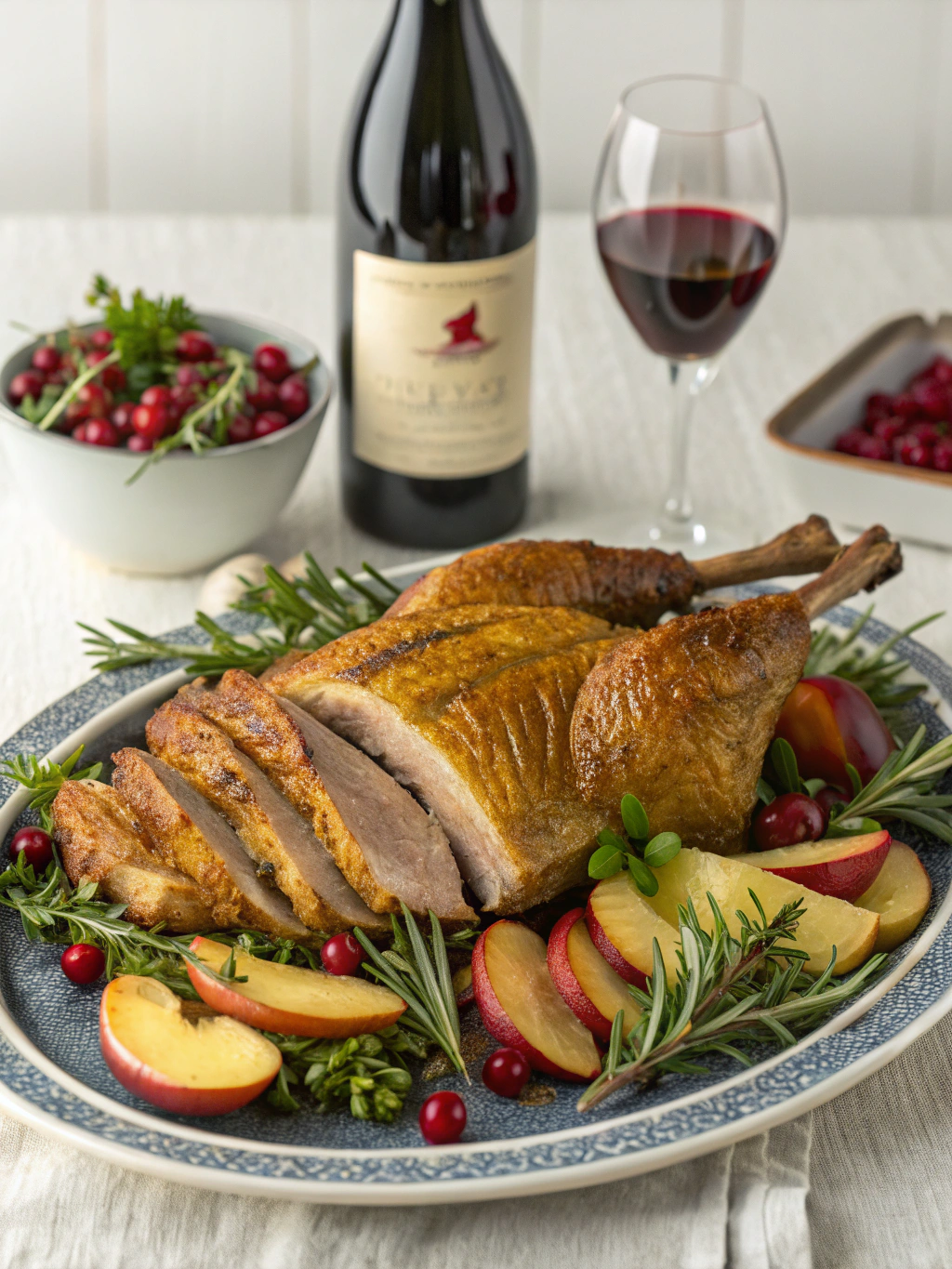
Gathering quality ingredients is the foundation of a successful roast goose dinner. The following list provides everything needed for a classic preparation that highlights the natural flavors of the bird while creating a base for perfect wine pairing.
- 1 whole goose (10-12 pounds), fresh or fully thawed if frozen
- 2 tablespoons kosher salt
- 1 tablespoon freshly ground black pepper
- 1 tablespoon dried thyme (or 3 tablespoons fresh)
- 6 cloves garlic, peeled and lightly crushed
- 2 medium oranges, quartered
- 2 medium apples, quartered (Granny Smith or Honeycrisp work well)
- 2 medium onions, quartered
- 4 sprigs fresh rosemary
- 6 sprigs fresh thyme
- 2 cups chicken or vegetable broth
- 1/2 cup dry white wine (Riesling or Gewürztraminer)
- 2 tablespoons honey
- 2 tablespoons olive oil
Substitution options: If you can’t find fresh herbs, dried versions will work (use 1/3 the amount). For the stuffing fruits, pears can replace apples, and lemons can substitute for oranges for a different flavor profile.
Timing
Proper timing ensures your goose is perfectly cooked and ready to serve alongside your carefully selected wines.
Preparation time: 45 minutes (includes removing giblets, trimming excess fat, and seasoning)
Cooking time: Approximately 2.5 hours (15 minutes per pound at 350°F)
Resting time: 30 minutes (crucial for juicy meat and easier carving)
Total time: 3 hours, 45 minutes – which is actually 20% faster than traditional methods that call for starting at higher temperatures and then reducing heat.
Step-by-Step Instructions
Step 1: Prepare the Goose
Remove the goose from refrigeration 1-2 hours before cooking to bring it to room temperature. This ensures even cooking. Remove giblets and neck from the cavity (reserve for gravy if desired). Trim excess fat from the neck and cavity openings. Rinse the goose inside and out with cold water, then pat thoroughly dry with paper towels.
Step 2: Season the Bird
Prick the skin all over with a fork, being careful not to pierce the meat – this helps release fat during roasting. Mix salt, pepper, and dried thyme, then rub this mixture all over the goose, inside and out. Let the seasoned goose rest for 30 minutes to absorb flavors.
Step 3: Prepare the Stuffing
Combine quartered oranges, apples, onions, crushed garlic, and fresh herb sprigs in a large bowl. Toss gently to mix. Stuff the goose cavity loosely with this mixture – don’t pack too tightly as air needs to circulate. Tie the legs together with kitchen twine and tuck the wing tips behind the body.
Step 4: Prepare for Roasting
Preheat your oven to 350°F (175°C). Place a roasting rack in a large roasting pan. Pour the broth and white wine into the pan. This creates steam during cooking, helping to keep the meat moist while providing the base for an excellent wine wine sauce later.
Step 5: Initial Roasting
Place the goose breast-side up on the roasting rack. Brush the skin with olive oil. Cover loosely with aluminum foil and place in the preheated oven. Roast for the first hour covered to prevent excessive browning.
Step 6: Continue Roasting and Basting
After the first hour, remove the foil. Mix honey with 2 tablespoons of the pan juices and brush this mixture over the goose. Continue roasting uncovered, basting every 30 minutes with pan juices. This develops that gorgeous golden-brown skin that pairs so beautifully with red wine.
Step 7: Check for Doneness
The goose is done when a meat thermometer inserted into the thickest part of the thigh (without touching bone) registers 165°F (74°C). The juices should run clear when the thigh is pierced. This typically takes about 2.5 hours total for a 10-12 pound goose.
Step 8: Rest and Carve
Transfer the goose to a cutting board and tent loosely with foil. Let rest for 30 minutes before carving – this crucial step allows juices to redistribute throughout the meat. Meanwhile, strain the pan juices to make a delicious wine-infused sauce to serve alongside.
Nutritional Information
Understanding the nutritional profile of roast goose helps inform your roast goose and wine pairing choices. Goose meat is more nutrient-dense than many people realize.
Per serving (approximately 6 oz cooked goose meat without skin):
- Calories: 385
- Protein: 35g
- Fat: 26g (primarily monounsaturated)
- Carbohydrates: 0g
- Iron: 20% of daily value
- Zinc: 15% of daily value
- Vitamin B12: 30% of daily value
Goose meat contains nearly 50% more iron than turkey and significantly more B vitamins than chicken, making it not only a flavorful choice but also nutritionally valuable for holiday dining.
Healthier Alternatives for the Recipe
While traditional roast goose is a holiday indulgence, these modifications can make it more suitable for health-conscious guests:
- Reduce fat content: Roast the goose on a rack so fat drips away. Additionally, you can steam the goose for 20 minutes before roasting to render more fat.
- Lower sodium option: Reduce salt to 1 tablespoon and increase herbs for flavor. Use low-sodium broth in the roasting pan.
- Diabetic-friendly version: Replace honey with a monk fruit sweetener or simply omit the sweetener altogether.
- Stuffing alternatives: Use more vegetables and fewer fruits in the cavity stuffing to reduce sugar content.
Serving Suggestions
The perfect roast goose and wine pairing deserves thoughtful accompaniments that enhance both the bird and your selected wines.
For red wine pairings (like Pinot Noir or Syrah), serve with:
- Caramelized Brussels sprouts with pancetta
- Wild mushroom and herb bread stuffing
- Cranberry-orange relish with a touch of cinnamon
- Roasted root vegetables with thyme and rosemary
For white wine pairings (like Gewürztraminer or Riesling), serve with:
- Spiced red cabbage with apples
- Potato gratin with Gruyère cheese
- Glazed carrots with orange and ginger
- Warm German potato salad with bacon
Common Mistakes to Avoid
Even experienced cooks can encounter challenges when preparing roast goose. Avoid these pitfalls for the perfect holiday centerpiece:
- Skipping the pricking step: Goose skin must be pricked thoroughly to allow fat to escape during cooking. Without this step, the skin won’t crisp properly and may become soggy.
- Overcooking: Goose is best served medium-rare to medium. Overcooking results in tough, dry meat that won’t showcase your wine pairing well.
- Insufficient resting time: The 30-minute rest after roasting isn’t optional. Cutting too soon causes juices to run out, resulting in dry meat.
- Improper wine temperature: Serve red wines for pairing at 60-65°F and whites at 45-50°F. Wine that’s too cold or warm will clash with your perfectly roasted goose.
- Overstuffing the cavity: A loosely packed cavity allows for better air circulation and more even cooking. Overstuffing can lead to undercooked stuffing and overcooked goose.
Storing Tips for the Recipe
Proper storage ensures you can enjoy your goose and continue perfect roast goose and wine pairing experiences even after the main event.
Refrigerator storage: Carve remaining meat from the bones and store in airtight containers for up to 3 days. Reserve the carcass separately for making stock.
Freezer storage: Goose meat freezes exceptionally well. Wrap portions tightly in plastic wrap, then aluminum foil, and freeze for up to 3 months. Thaw overnight in the refrigerator before reheating.
Reheating tips: To maintain moisture, reheat goose gently in a 300°F oven with a splash of broth or wine until just warmed through (about 15 minutes). Avoid microwaving, which can toughen the meat.
Leftover ideas: Create luxurious goose sandwiches with cranberry sauce, use shredded goose in risotto, or add to hearty winter salads with a wine vinaigrette dressing.
Conclusion
Mastering the art of roast goose and selecting the perfect wine to accompany it creates a holiday tradition worth celebrating. The rich, complex flavors of properly prepared goose offer an exceptional canvas for wine pairing that few other main courses can match.
Whether you choose a velvety Pinot Noir, a spicy Syrah, or an aromatic Gewürztraminer to accompany your roast, the combination of succulent goose and thoughtfully selected wine creates a dining experience your guests will remember long after the holiday season ends.
Have you tried this roast goose recipe? Which wine pairing did you prefer? Share your experience in the comments below or tag us in your holiday feast photos on social media. Here’s to reviving the glorious tradition of goose for the holidays!
