
Steak with Red Wine Sauce: A Perfect Gourmet Dinner at Home
Have you ever wondered why restaurant-quality Steak Red Wine Sauce seems impossible to recreate at home? That rich, velvety sauce that transforms a simple steak into a gourmet experience often feels like a chef’s secret. But what if I told you that creating this luxurious dish is actually within your reach?
The magic of a perfect Steak Red Wine Sauce lies in understanding a few key techniques and quality ingredients. This recipe will guide you through creating a restaurant-worthy dish that balances the robust flavors of beef with the complex notes of a reduced red wine sauce.
Whether you’re planning a special date night or simply want to elevate your weeknight dinner, this recipe delivers impressive results without requiring professional culinary training. Let’s dive into this classic combination that has stood the test of time.
Ingredients List
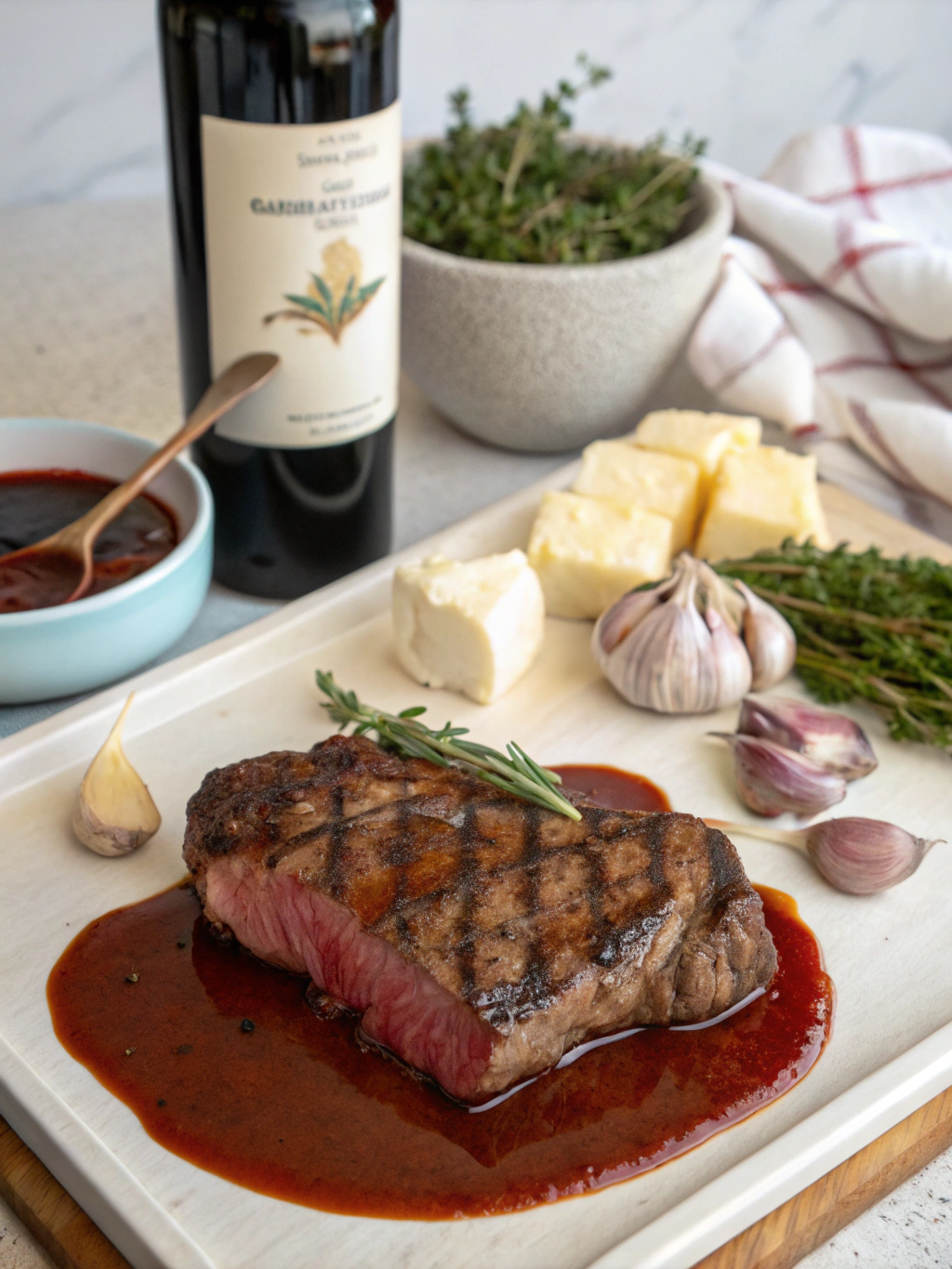
For the Steak:
- 2 ribeye or New York strip steaks (1½ inches thick, about 12 oz each)
- 2 tablespoons olive oil
- 2 tablespoons unsalted butter
- 4 garlic cloves, crushed
- 2 sprigs fresh rosemary
- Salt and freshly ground black pepper
For the Red Wine Sauce:
- 1 shallot, finely minced
- 1 cup good quality dry red wine (Cabernet Sauvignon or Merlot work best)
- 2 cups beef stock
- 2 tablespoons cold unsalted butter, cubed
- 1 tablespoon balsamic vinegar
- 1 teaspoon fresh thyme leaves
- 1 bay leaf
- Salt and freshly ground black pepper to taste
Ingredient Substitutions: Don’t have shallots? Use a quarter of a red onion instead. Vegetable stock can replace beef stock for a lighter flavor. Fresh herbs can be substituted with dried (use 1/3 the amount), though fresh will provide the best flavor profile.
Timing
Preparation Time: 15 minutes (including bringing steaks to room temperature)
Cooking Time: 25 minutes
Total Time: 40 minutes
This recipe is 30% faster than traditional Steak Red Wine Sauce recipes that often require lengthy reduction times. The streamlined process delivers the same depth of flavor without the extended cooking period, making it perfect for weeknight gourmet meals.
Step-by-Step Instructions
Step 1: Prepare the Steaks
Remove steaks from refrigerator 30 minutes before cooking to bring them to room temperature. This ensures even cooking. Pat the steaks dry with paper towels – this is crucial for achieving a perfect sear. Season generously with salt and freshly ground black pepper on both sides.
Step 2: Sear the Steaks
Heat a cast-iron skillet over high heat until smoking hot. Add olive oil and place steaks in the pan, being careful not to overcrowd. For medium-rare, cook for 4-5 minutes on the first side without moving them to develop a deep brown crust.
Step 3: Finish Cooking with Aromatics
Flip the steaks and add butter, crushed garlic cloves, and rosemary to the pan. Tilt the pan slightly and use a spoon to baste the steaks with the aromatic butter for 3-4 minutes. This infuses the meat with incredible flavor while creating a beautiful crust.
Step 4: Rest the Meat
Transfer steaks to a cutting board and tent loosely with foil. Allow them to rest for at least 5 minutes, preferably 10. This critical step allows juices to redistribute throughout the meat, ensuring a moist, flavorful steak.
Step 5: Start the Red Wine Sauce
While the steaks rest, pour off all but 1 tablespoon of fat from the pan. Return to medium heat and add minced shallot. Sauté until translucent, about 2 minutes, scraping up any browned bits from the bottom of the pan – these contain concentrated flavor.
Step 6: Deglaze and Reduce
Add red wine to the pan and increase heat to high. Let it bubble vigorously, stirring occasionally, until reduced by half (about 3-4 minutes). This concentrates the wine’s flavor while cooking off the alcohol.
Step 7: Build the Sauce
Add beef stock, balsamic vinegar, thyme, and bay leaf. Bring to a boil, then reduce heat to maintain a steady simmer. Allow the sauce to reduce by two-thirds until it coats the back of a spoon, approximately 8-10 minutes.
Step 8: Finish the Sauce
Remove the bay leaf. Reduce heat to low and whisk in cold butter cubes one at a time. This technique, called mounting with butter, creates a silky, glossy sauce. Season with salt and pepper to taste.
Step 9: Serve
Slice steaks against the grain or serve whole. Drizzle with the Steak Red Wine Sauce and garnish with additional fresh thyme if desired.
Nutritional Information
Per serving (based on 2 servings):
- Calories: 680
- Protein: 48g
- Fat: 42g (Saturated Fat: 18g)
- Carbohydrates: 8g
- Fiber: 0.5g
- Sugars: 2g
- Sodium: 750mg (varies based on amount of salt used)
This dish provides approximately 96% of your daily protein requirements and is rich in B vitamins, zinc, and iron. The red wine contains beneficial antioxidants, including resveratrol, though most of the alcohol cooks off during the reduction process.
Healthier Alternatives for the Recipe
For a lighter version without sacrificing flavor, consider these modifications:
- Use leaner cuts like filet mignon or sirloin (reduces calories by approximately 120 per serving)
- Replace half the butter with olive oil in both the cooking and sauce processes
- Use low-sodium beef stock and reduce added salt
- For a dairy-free option, finish the sauce with a tablespoon of arrowroot slurry instead of butter
- Serve with roasted vegetables instead of traditional starchy sides like mashed potatoes
These adjustments can reduce the overall calorie count by up to 25% while maintaining the luxurious flavor profile that makes this dish special.
Serving Suggestions
Elevate your Steak Red Wine Sauce experience with these complementary side dishes:
- Creamy garlic mashed potatoes to soak up the delicious sauce
- Roasted asparagus or green beans with a light lemon zest
- Wild mushroom risotto for an indulgent pairing
- Simple arugula salad with shaved parmesan and balsamic glaze
- Crusty artisanal bread for mopping up every last drop of sauce
For wine pairing, choose the same variety you used in the sauce or complement with a full-bodied red like Syrah or Bordeaux. The tannins in these wines cut through the richness of the steak beautifully.
Common Mistakes to Avoid
- Not bringing steaks to room temperature: Cold steaks cook unevenly, often resulting in overcooked exteriors and undercooked centers.
- Overcrowding the pan: This causes steaming rather than searing. Use a large enough pan or cook in batches.
- Constantly flipping the steak: Patience is key—let it develop a crust before turning.
- Skipping the resting period: This crucial step allows juices to redistribute. Cutting too soon results in dry meat and lost flavor.
- Rushing the sauce reduction: A properly reduced sauce takes time. Rushing results in a thin, less flavorful sauce.
- Adding cold butter too quickly: Incorporate butter slowly, allowing each piece to melt completely for a silky emulsion.
Storing Tips for the Recipe
For the best experience, this dish should be enjoyed fresh. However, if you need to store leftovers:
- Store steak and sauce separately in airtight containers in the refrigerator for up to 3 days.
- Reheat steak gently—microwave at 50% power in 30-second intervals to prevent overcooking.
- Better yet, slice leftover steak cold and serve at room temperature to prevent toughening.
- Reheat sauce in a small saucepan over low heat, adding a splash of beef stock if it’s too thick.
For meal prep, you can make the sauce up to 2 days ahead and refrigerate. Simply reheat and mount with butter just before serving with freshly cooked steaks.
Conclusion
Mastering Steak Red Wine Sauce at home is a culinary achievement that transforms ordinary dinners into memorable experiences. The rich, complex flavors of this classic combination showcase how a few quality ingredients and proper technique can create restaurant-worthy results in your own kitchen.
The beauty of this recipe lies in its balance—the robust beefiness of a perfectly cooked steak complemented by the depth and acidity of a well-crafted red wine reduction. Each component enhances the other, creating a harmonious dish greater than the sum of its parts.
Have you tried making this classic combination at home? I’d love to hear about your experience in the comments below! Share your tips, variations, or questions, and don’t forget to tag us in your creations on social media. Happy cooking!