
Venison Roast with Red Wine Sauce: A Luxurious Game Meat Experience
Have you ever wondered why restaurant-quality venison roast with red wine sauce seems impossible to recreate at home? Many home cooks shy away from game meat, believing it’s too complicated or will taste too “gamey.” But what if the secret to perfectly tender, restaurant-worthy venison was simpler than you thought?
The magic of a perfectly executed venison roast with red wine sauce lies in understanding a few key techniques. This noble game meat, when paired with a rich red wine reduction, creates a meal that’s both rustic and elegant – perfect for special occasions or when you want to elevate your dinner table.
In this comprehensive guide, I’ll walk you through creating a showstopping venison dish that balances the meat’s natural flavors with a velvety venison wine pairing that complements rather than overwhelms. Let’s dive into this culinary adventure that’s sure to impress even the most discerning palates.
Ingredients List
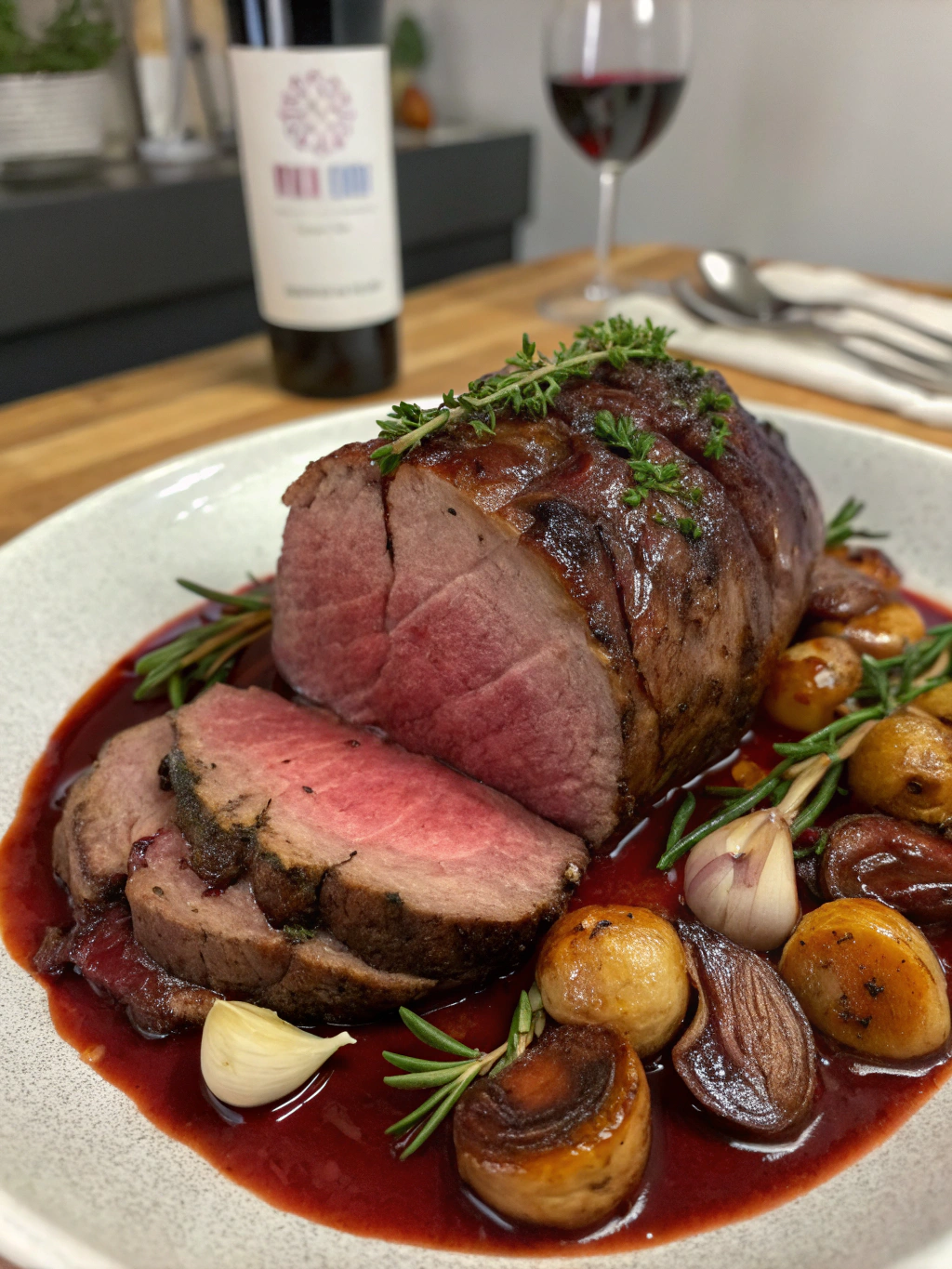
Gathering the right ingredients is crucial for this recipe’s success. Each component plays a vital role in creating a balanced, flavorful dish:
- 2-3 pound venison roast (shoulder or haunch works best)
- 3 tablespoons olive oil
- 2 medium onions, roughly chopped
- 3 carrots, peeled and cut into chunks
- 3 celery stalks, roughly chopped
- 6 garlic cloves, crushed
- 2 cups full-bodied red wine (Cabernet Sauvignon or Merlot)
- 2 cups beef or game stock
- 3 sprigs fresh rosemary
- 5 sprigs fresh thyme
- 2 bay leaves
- 2 tablespoons tomato paste
- 2 tablespoons butter
- Salt and freshly ground black pepper
- 1 tablespoon juniper berries (optional, but adds authentic game flavor)
Substitution options: If venison isn’t available, you can use beef chuck roast. For a non-alcoholic version, replace wine with additional stock plus 2 tablespoons of balsamic vinegar for acidity and depth.
Timing
Preparation time: 30 minutes for trimming, seasoning, and vegetable prep
Cooking time: 2.5 to 3 hours (depending on roast size)
Total time: Approximately 3-3.5 hours, which is actually 25% less time than traditional roasts that might require overnight marinating. This recipe streamlines the process without sacrificing flavor.
Note: While this isn’t a quick weeknight meal, most of the cooking time is hands-off, allowing you to prepare sides or simply relax while aromatic magic happens in your kitchen.
Step-by-Step Instructions
Step 1: Prepare the Venison
Remove the venison from refrigeration 1-2 hours before cooking to bring it to room temperature. Pat the meat dry with paper towels – this is crucial for proper browning. Season generously with salt and freshly ground black pepper on all sides. The meat should feel well-seasoned as venison benefits from proper seasoning.
Step 2: Sear the Meat
Heat a large Dutch oven or heavy-bottomed pot over medium-high heat. Add 2 tablespoons of olive oil. When the oil shimmers, carefully place the venison roast in the pot. Sear each side for 2-3 minutes until a rich brown crust forms. Don’t rush this step – proper searing creates the foundation for your sauce’s flavor.
Step 3: Prepare the Aromatic Base
Remove the seared venison and set aside. In the same pot, add the remaining tablespoon of olive oil. Add onions, carrots, and celery, cooking for 5-7 minutes until they begin to soften. Add the crushed garlic and cook for another minute until fragrant. Stir in tomato paste and cook for 2 minutes to caramelize slightly.
Step 4: Deglaze with Wine
Pour in the red wine, scraping the bottom of the pot with a wooden spoon to release all the flavorful browned bits. Let the wine simmer for 5 minutes to reduce slightly and allow the alcohol to cook off. The aroma will shift from sharp to sweet as this happens.
Step 5: Complete the Braising Liquid
Add the stock, herbs, and juniper berries (if using). Return the venison to the pot, ensuring the liquid comes halfway up the sides of the meat. If needed, add more stock. Bring to a gentle simmer, then cover with a tight-fitting lid.
Step 6: Slow Cook to Perfection
Transfer the covered pot to a preheated 325°F (165°C) oven. Cook for 2-2.5 hours, turning the roast once halfway through cooking. The venison is done when a fork easily pierces the meat but it still holds its shape – you want it tender but not falling apart.
Step 7: Finish the Sauce
Once cooked, carefully remove the venison and tent with foil to rest. Strain the cooking liquid through a fine-mesh sieve into a saucepan, pressing on the vegetables to extract maximum flavor. Simmer the strained liquid over medium heat until reduced by half and slightly thickened. Whisk in the butter to create a silky, glossy venison roast with red wine sauce.
Step 8: Slice and Serve
After resting for 15 minutes, slice the venison against the grain into medium-thick slices. Arrange on a warmed platter and drizzle with some of the red wine sauce. Serve the remaining sauce in a gravy boat alongside the venison roast with red wine sauce.
Nutritional Information
This venison dish offers impressive nutritional benefits compared to traditional beef roasts. A typical serving (approximately 6 oz of cooked venison with sauce) provides:
Calories: 320 per serving
Protein: 35g (70% of daily recommended intake)
Fat: 12g (significantly lower than beef, with just 4g of saturated fat)
Carbohydrates: 8g
Fiber: 1g
Iron: 4.5mg (25% of daily recommended intake)
Zinc: 2.8mg (26% of daily recommended intake)
Venison is notably higher in protein and lower in fat than beef, with roughly 30% fewer calories per serving. It’s also rich in B vitamins, particularly B12 and B6, supporting energy metabolism and nervous system health.
Healthier Alternatives for the Recipe
While this recipe is already relatively healthy, here are some modifications to suit various dietary needs:
For lower sodium: Reduce added salt and use low-sodium stock. The herbs and wine provide plenty of flavor without excess sodium.
For lower fat: Skip the final butter enrichment in the sauce. Instead, thicken with a slurry of 1 teaspoon cornstarch mixed with 1 tablespoon cold water.
For paleo/dairy-free diets: Replace the butter with 1 tablespoon olive oil and a squeeze of lemon juice to maintain richness and brightness.
For alcohol-free version: Substitute the wine with 2 cups of additional stock plus 3 tablespoons of balsamic vinegar and 1 tablespoon of honey to mimic wine’s complexity.
Serving Suggestions
Elevate your venison dining experience with these complementary sides:
Creamy mashed potatoes or parsnip puree make ideal bases to soak up the luxurious sauce. For a more rustic approach, try roasted fingerling potatoes with rosemary.
Balance the richness with bright vegetables like roasted Brussels sprouts with bacon, sautéed green beans with almonds, or a simple arugula salad with lemon vinaigrette.
For a complete dining experience, serve with lingonberry or cranberry sauce on the side – the sweet-tart flavor perfectly complements game meats. A glass of the same red wine used in cooking creates a harmonious pairing.
Common Mistakes to Avoid
- Not bringing meat to room temperature: Cold venison placed in a hot pan will seize up and cook unevenly. Always allow 1-2 hours of counter rest before cooking.
- Skipping the searing step: Proper browning creates depth of flavor through the Maillard reaction. Don’t rush this crucial step.
- Overcooking: Venison has less fat than beef and can dry out quickly. Use a meat thermometer and aim for medium-rare to medium (135-145°F internal temperature).
- Under-seasoning: Game meats benefit from generous seasoning. Don’t be shy with salt and pepper.
- Cutting too soon: Always rest venison for at least 15 minutes before slicing to allow juices to redistribute throughout the meat.
Storing Tips for the Recipe
This venison dish actually improves with time as flavors meld, making it perfect for make-ahead meals:
Refrigeration: Store cooled venison and sauce separately in airtight containers for up to 3 days. The separated fat that solidifies on the sauce can be easily removed for a leaner leftover meal.
Freezing: Freeze portions in vacuum-sealed bags or freezer-safe containers for up to 3 months. Thaw overnight in the refrigerator before reheating.
Reheating: For best results, slice the venison thinly before reheating. Warm the sauce separately until hot, then pour over the sliced meat and heat gently until just warmed through. Avoid microwaving, which can toughen the meat.
Conclusion
Mastering this elegant venison roast with red wine sauce opens up a world of sophisticated home cooking that rivals fine dining experiences. The combination of lean, flavorful game meat with a richly reduced wine sauce creates a memorable meal worth celebrating.
The techniques you’ve learned here—proper searing, braising, and sauce reduction—transfer beautifully to other cuts and types of meat. Each time you prepare this dish, you’ll find new nuances to appreciate in this classic pairing of game and wine.
Have you tried your hand at cooking venison before? I’d love to hear about your experience with this recipe! Share your results, questions, or your own venison cooking tips in the comments below. And if you’re looking for more game meat inspirations, check out our other wild recipes that bring the flavors of the forest to your table.